Context changes what you see


Two discs, one with a surround.
Context changes what you see


From dynamics to computation
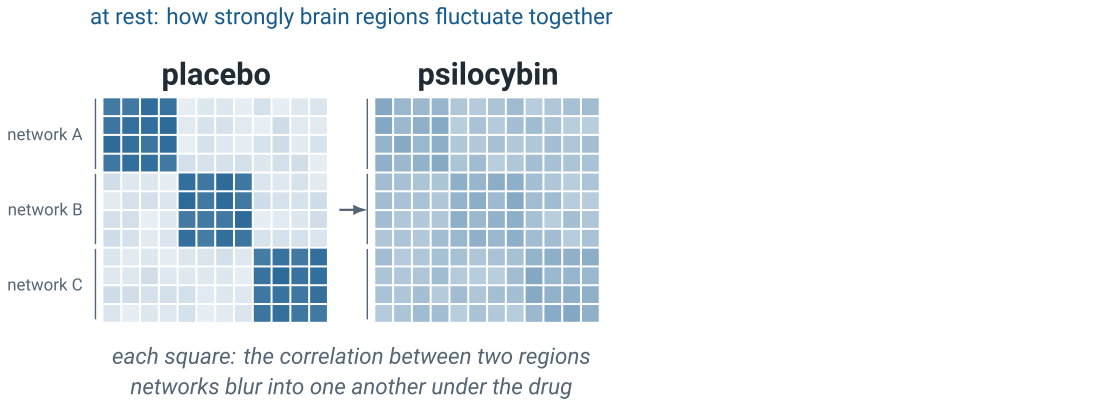
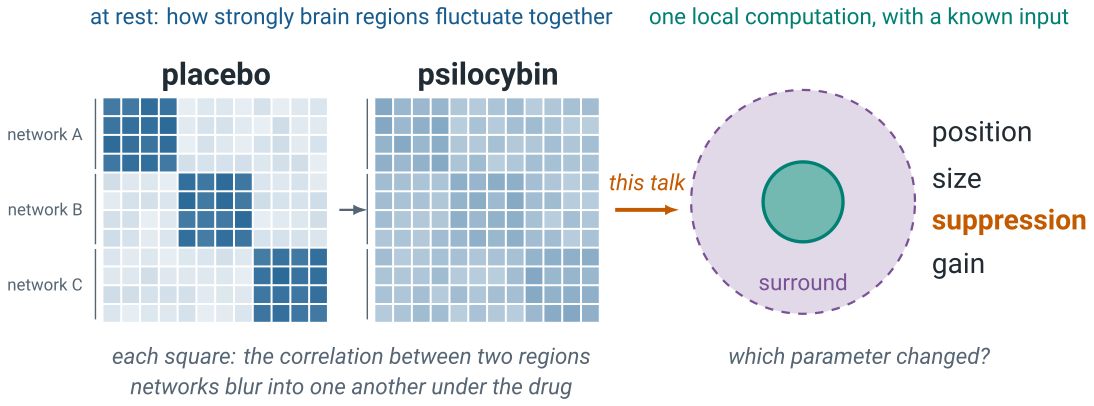
- Networks blur under psilocybin (Siegel et al. 2024); which computation changed?
The route today
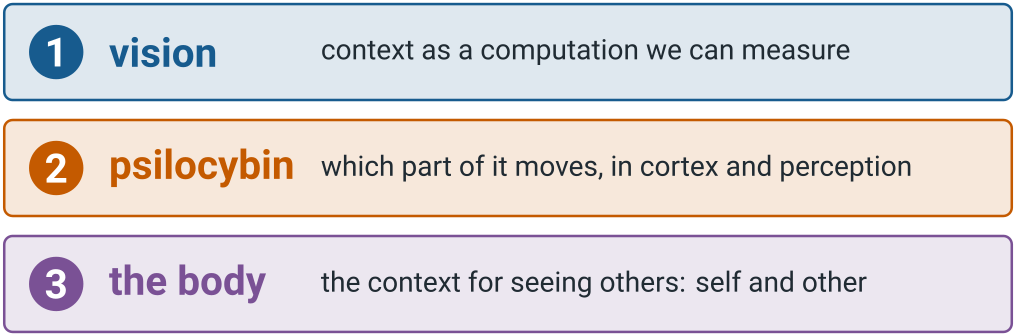
- First vision, where we know and understand the computations; then the body.
The surround suppresses
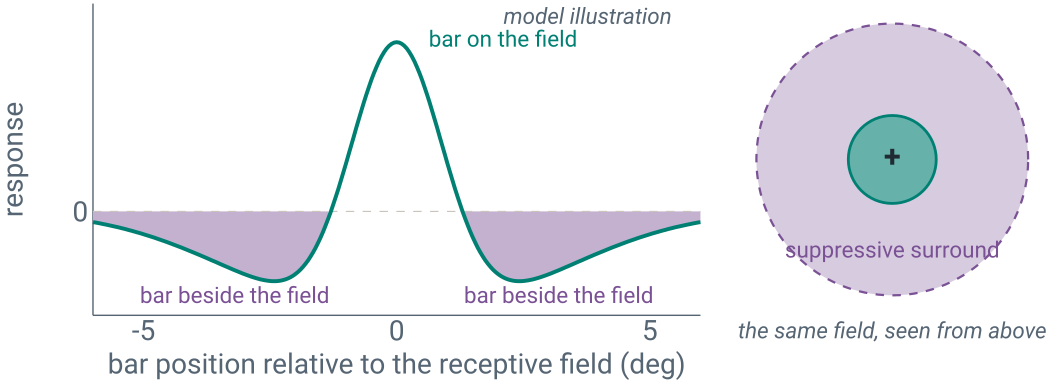
- Beside the field, the response dips below baseline: context at work.
Normalization is a ratio


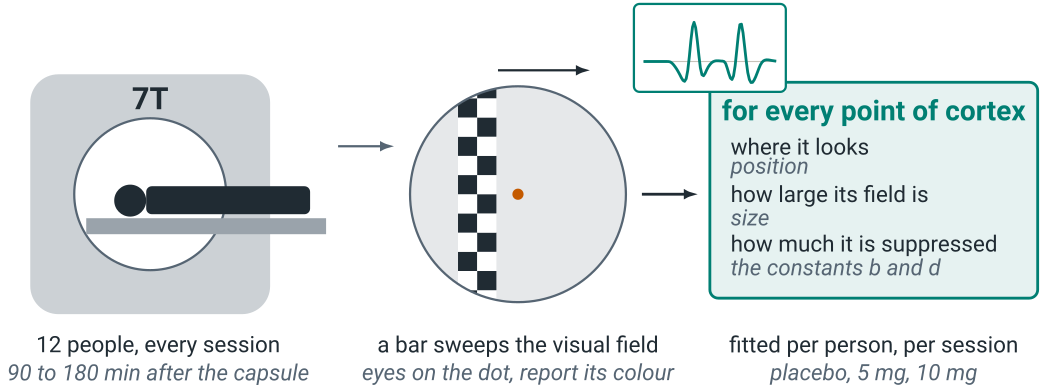
Input divided by context: a canonical computation (Carandini and Heeger 2012), here as a receptive field model (Aqil et al. 2021).
Suppression tracks serotonin
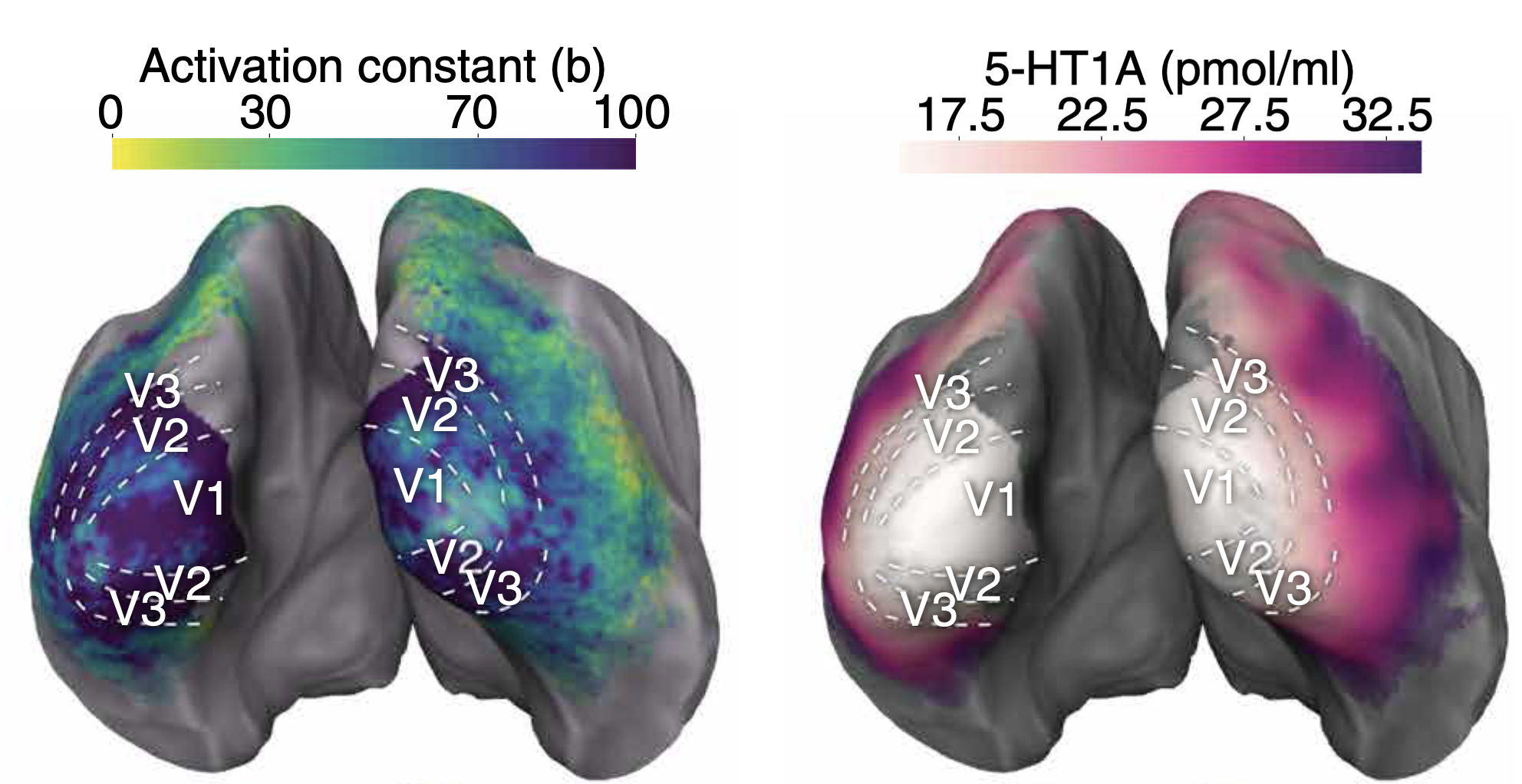
- Across visual cortex, b is lower where 5-HT1A receptors are denser (r = −0.67).
Aqil et al., Science Advances, 2024
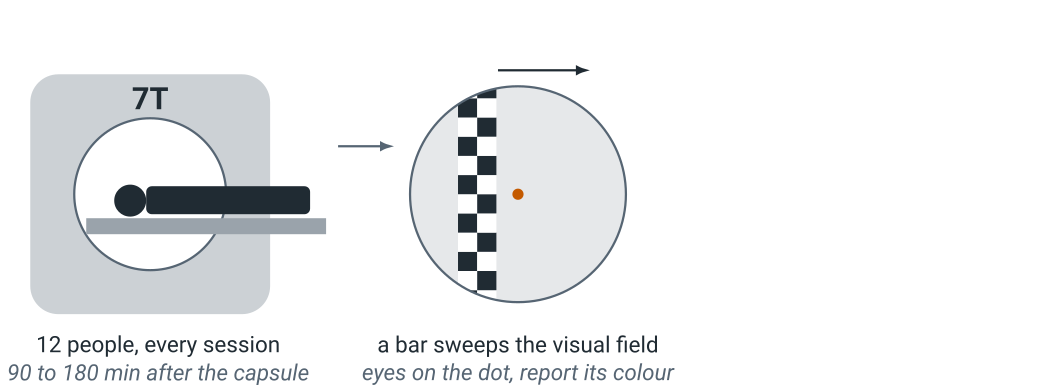
Three doses, double-blind
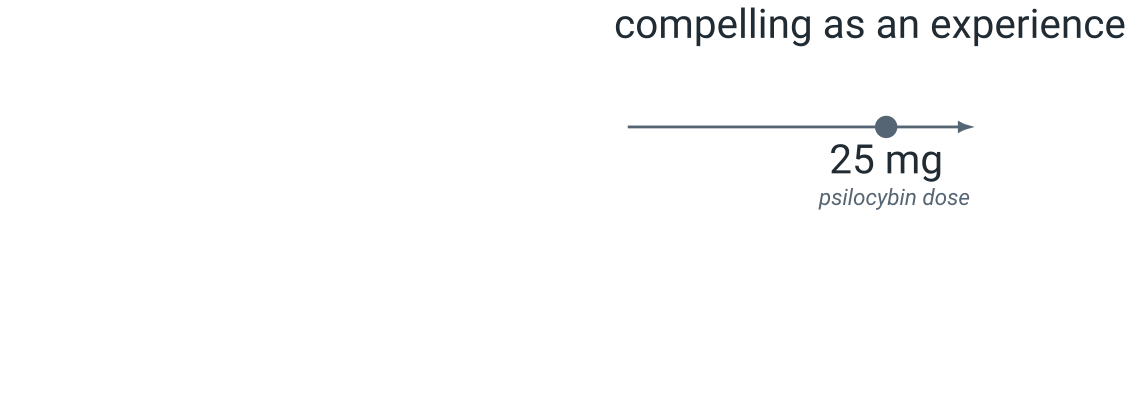
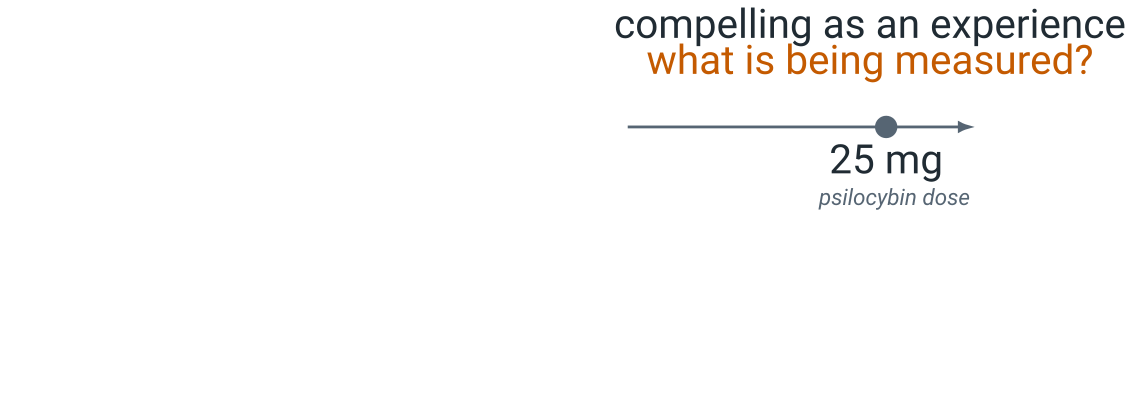
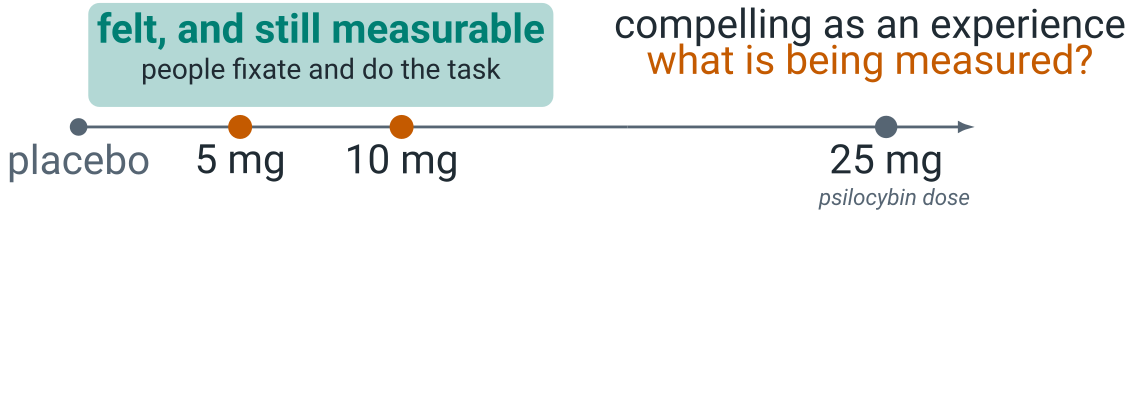
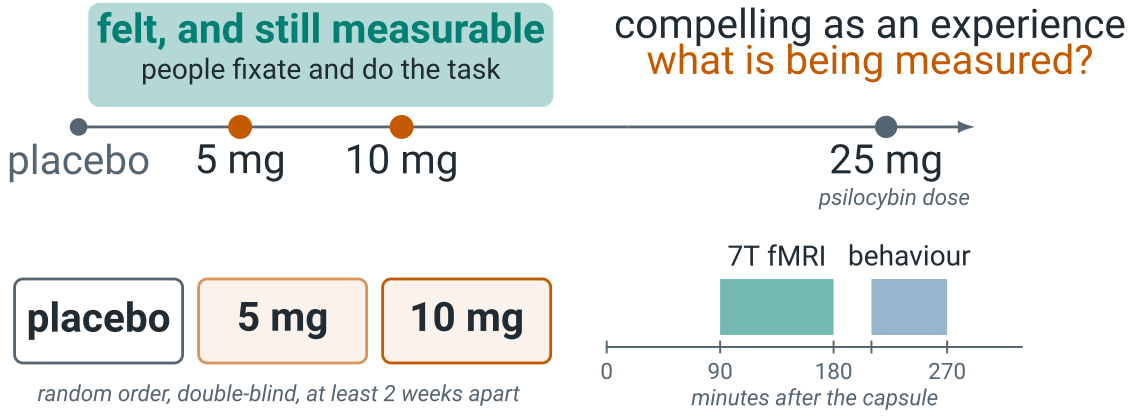
Aqil et al., Nature Communications, 2025
The Ebbinghaus illusion under psilocybin
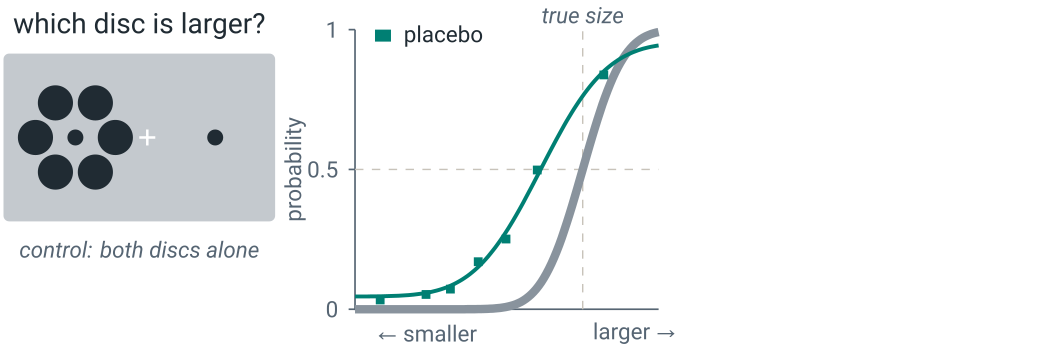
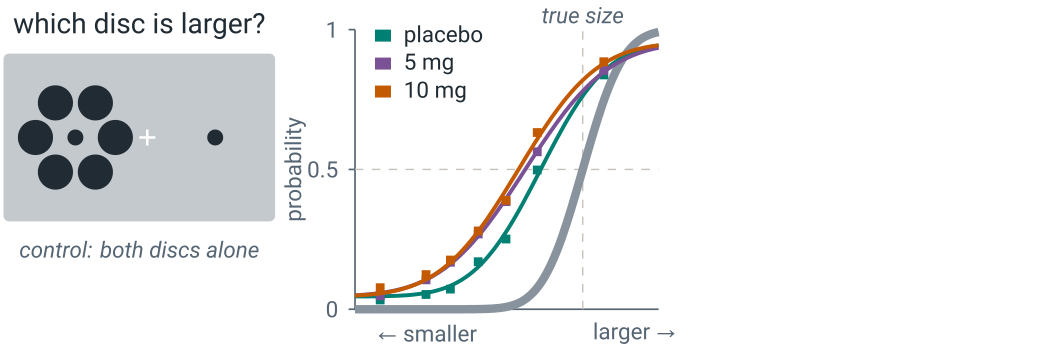
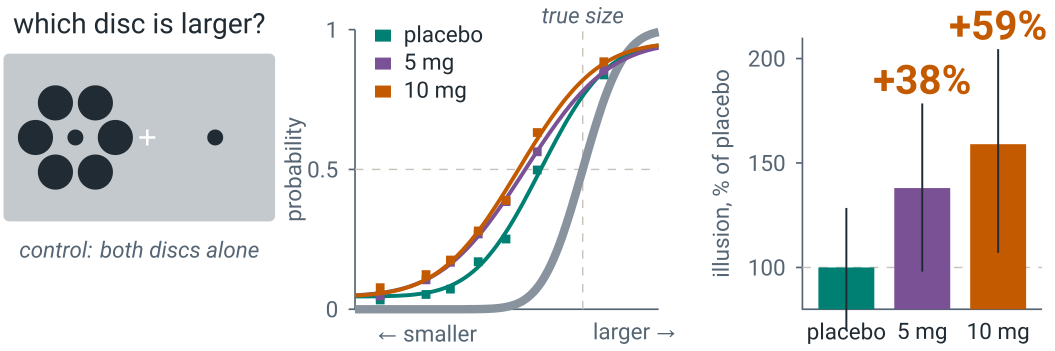
- Control trials, noise, slopes and lapses do not change.
Aqil et al., Nature Communications, 2025
In the scanner, maps hold
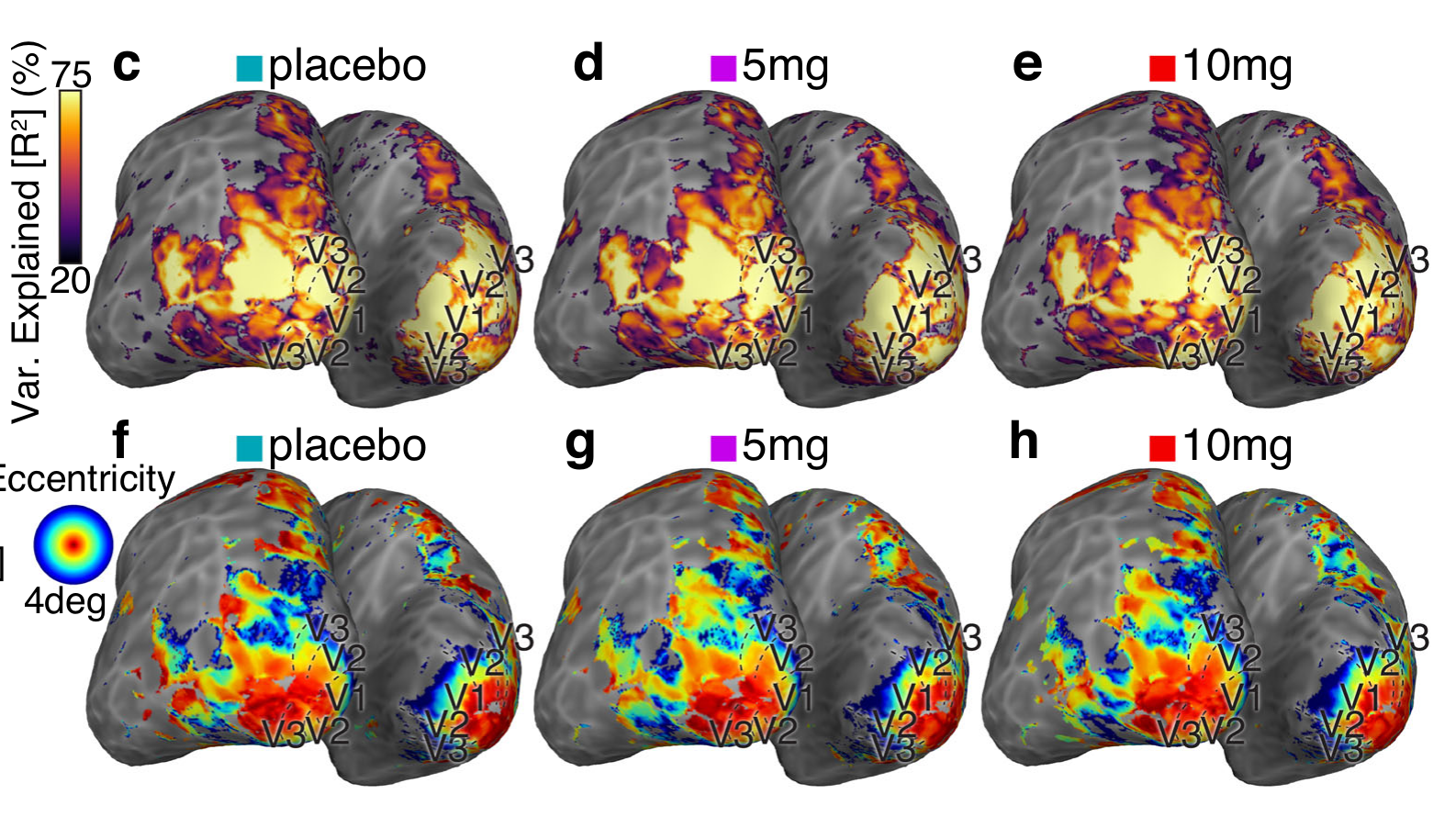
- Same participant, three sessions: the maps do not move.
- Data quality holds: variance explained does not change.
Aqil et al., Nature Communications, 2025
Psilocybin’s effects on surround suppression
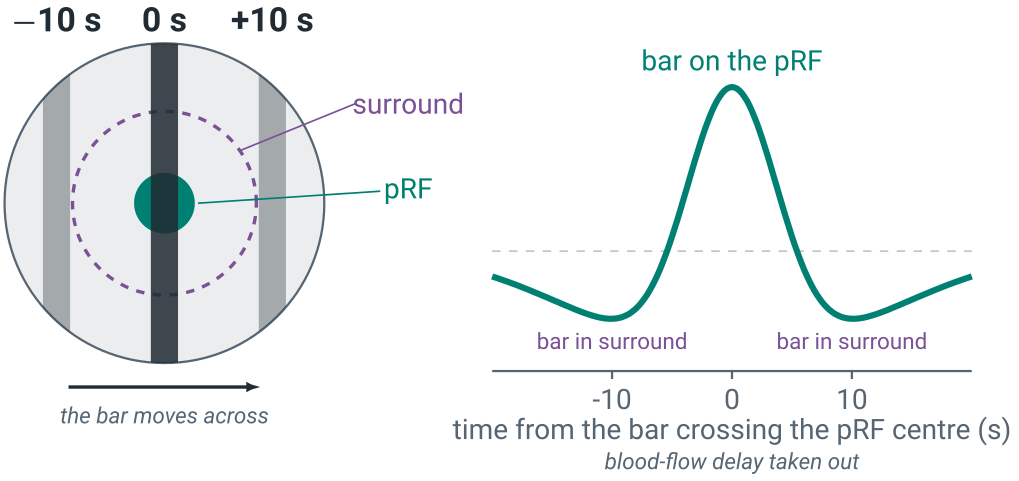
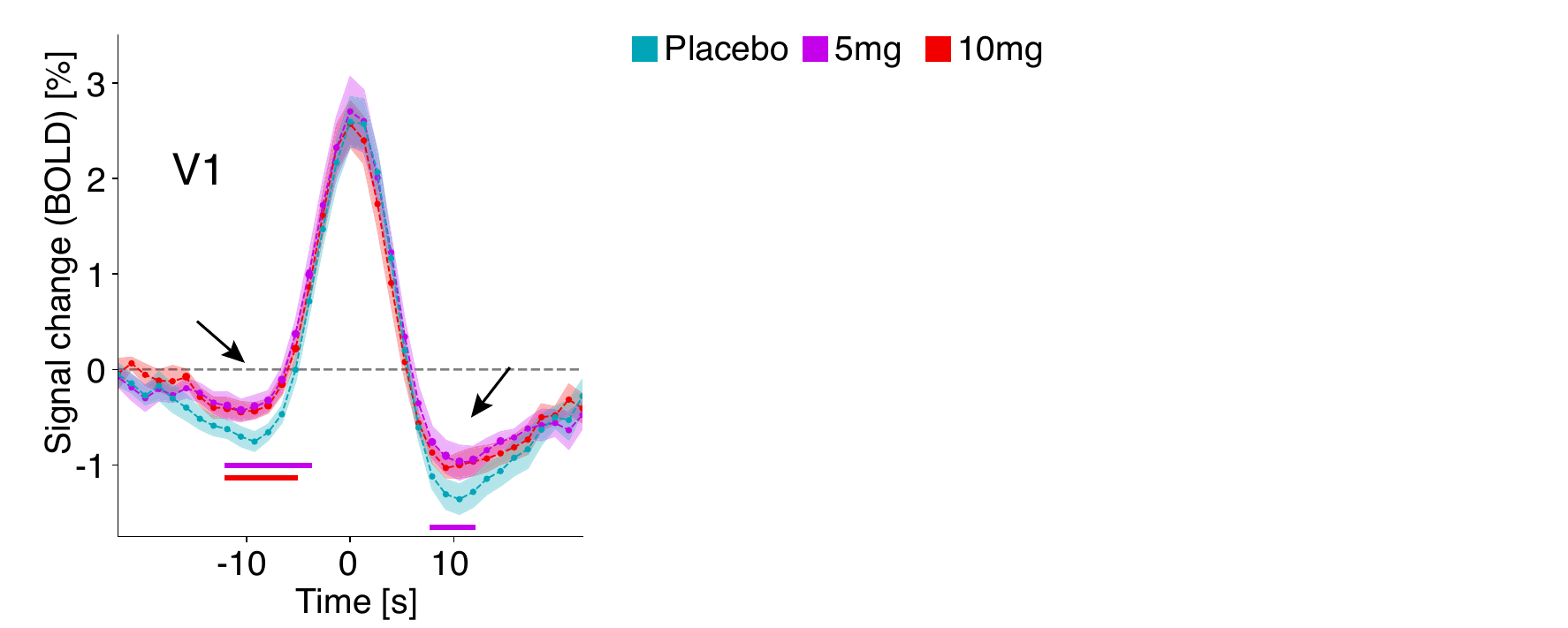
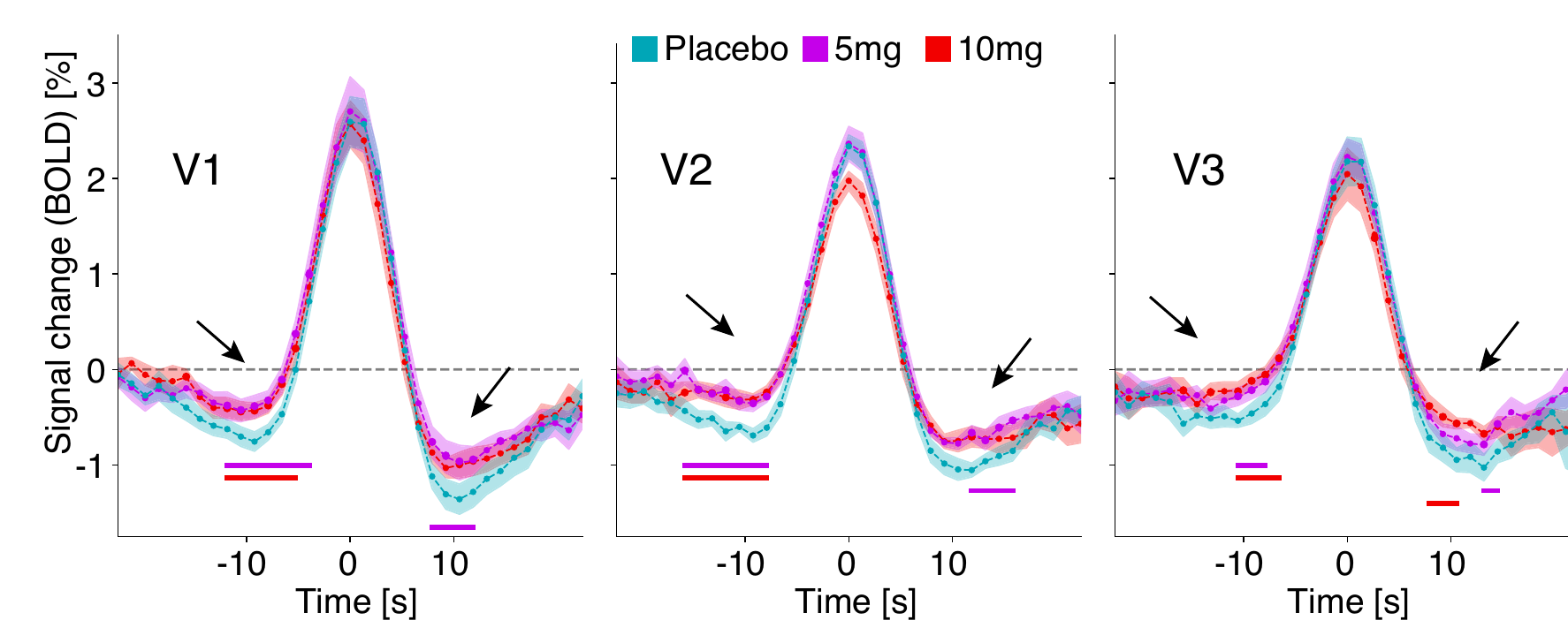
- The peak stays; the dips become shallower, at both doses.
Aqil et al., Nature Communications, 2025
Psilocybin changes surround suppression


Aqil et al., Nature Communications, 2025
From cortex to illusion
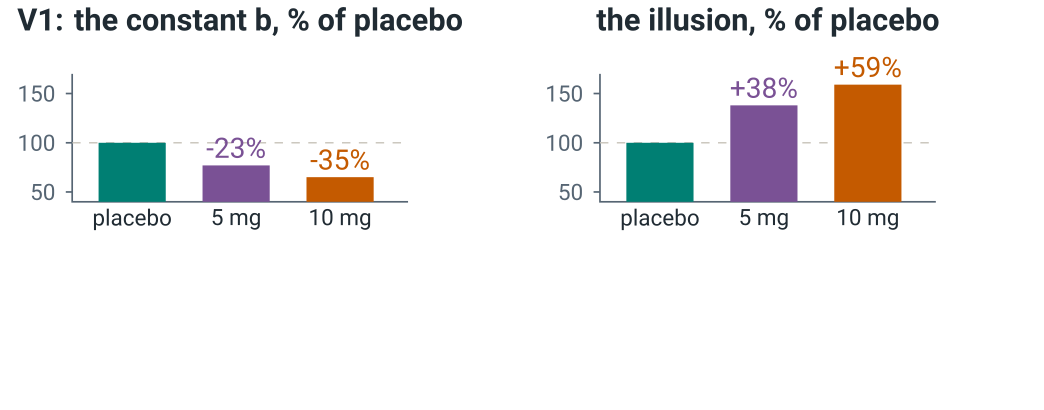
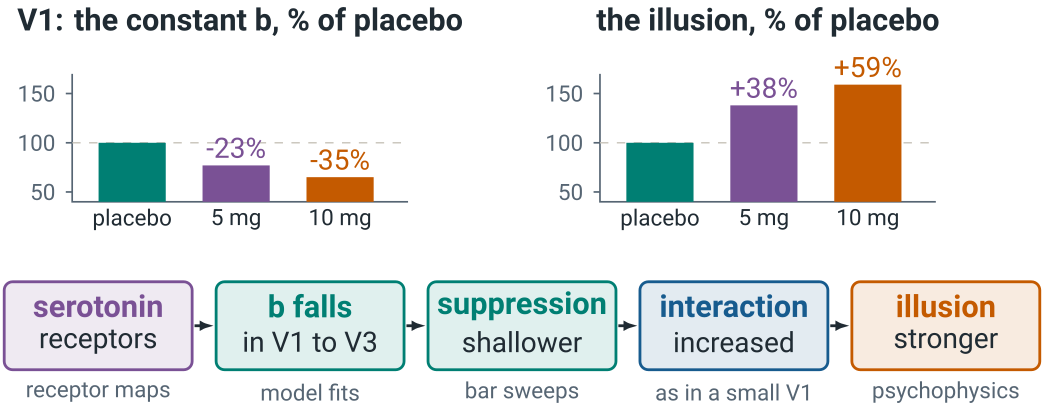
- Across people: larger drop in b, larger rise in the illusion.
Aqil et al., Nature Communications, 2025
Controls for flow and noise
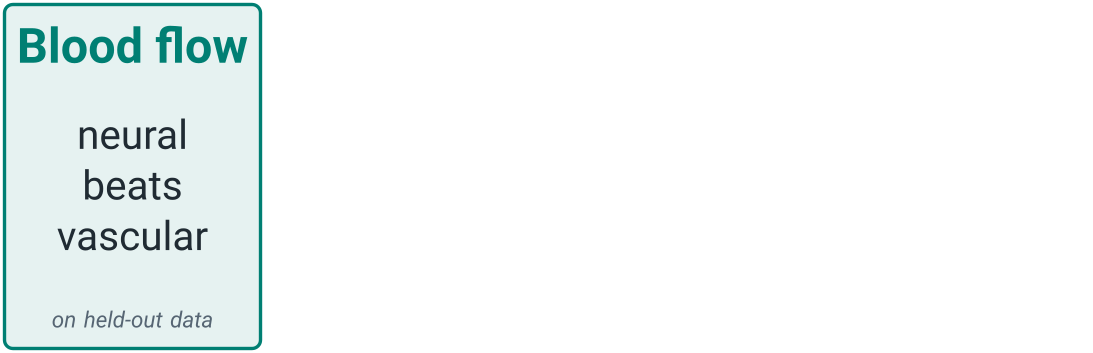
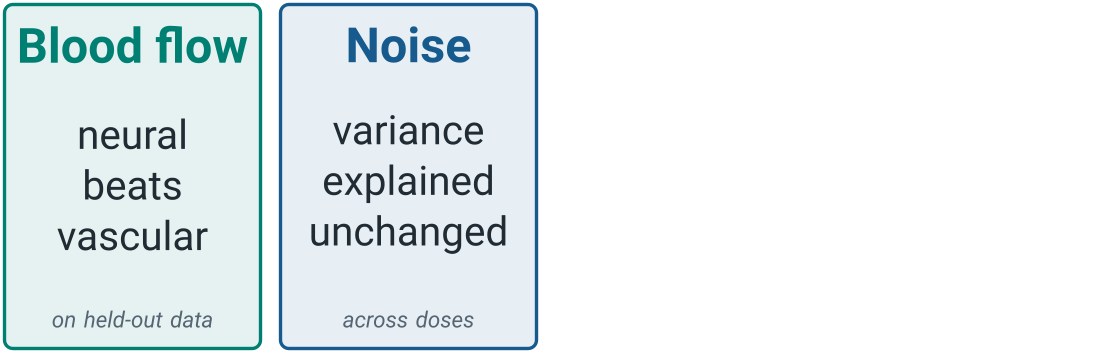
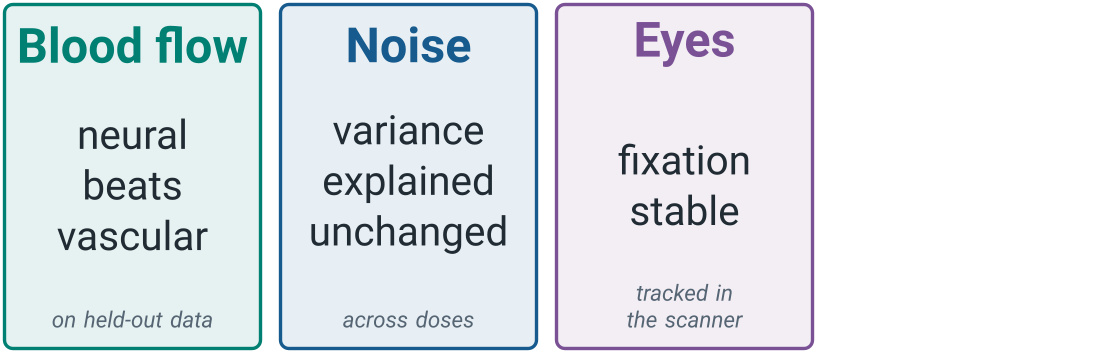
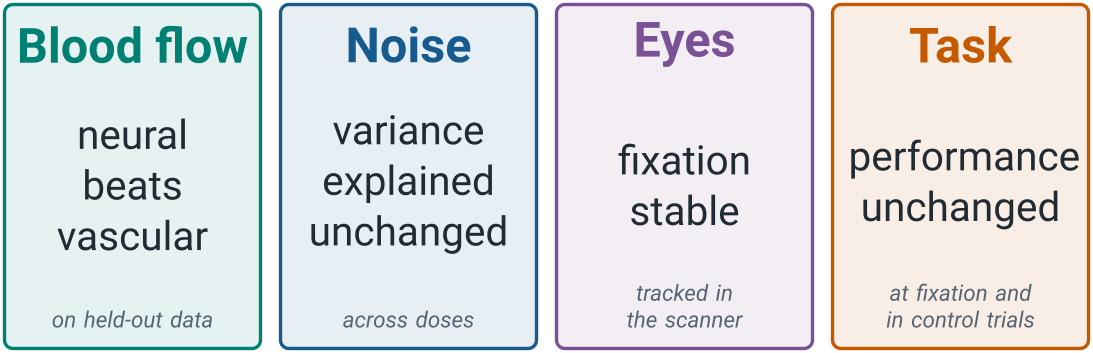
Aqil et al., Nature Communications, 2025
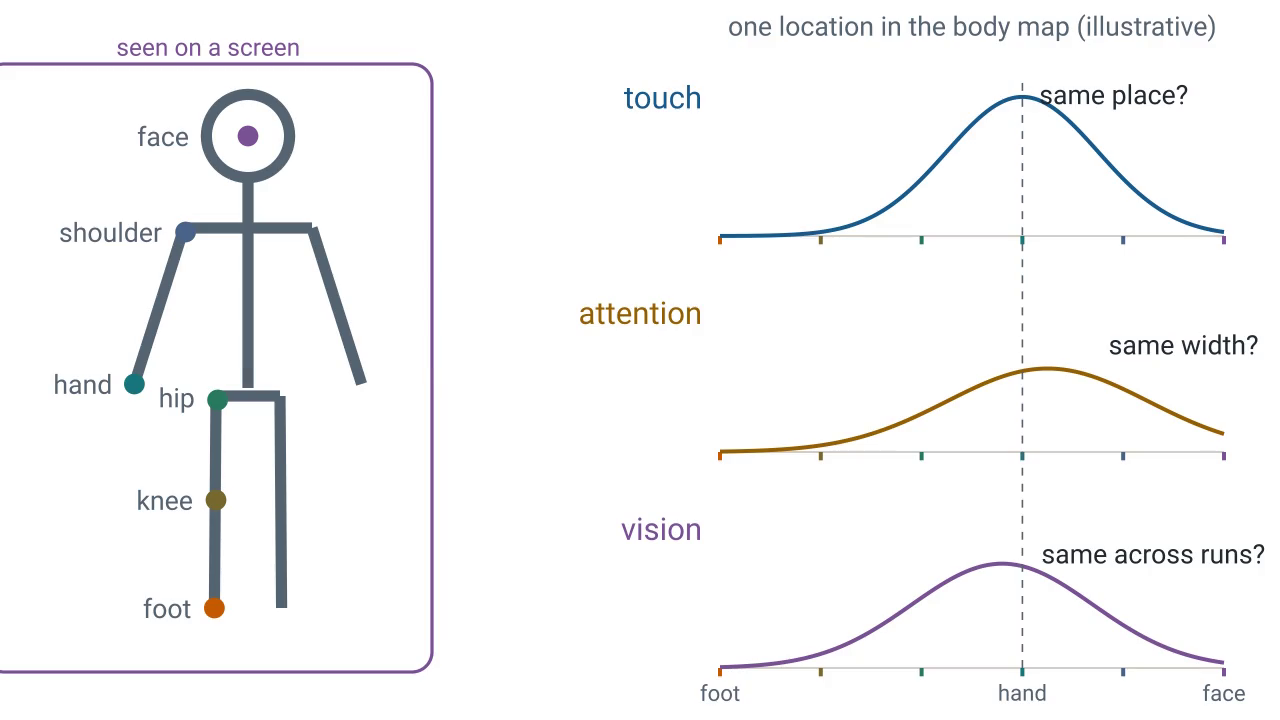
Seeing touch, feeling touch
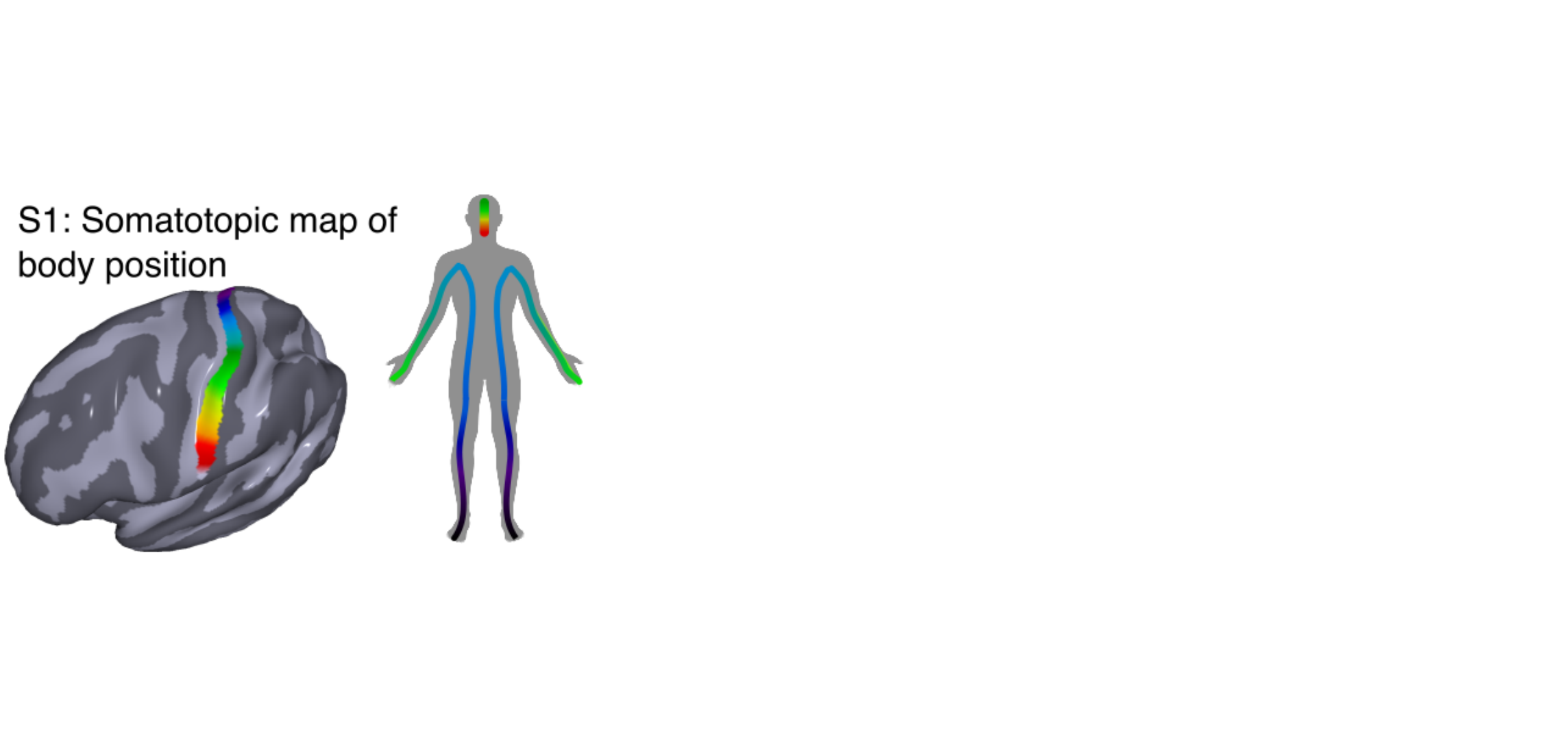
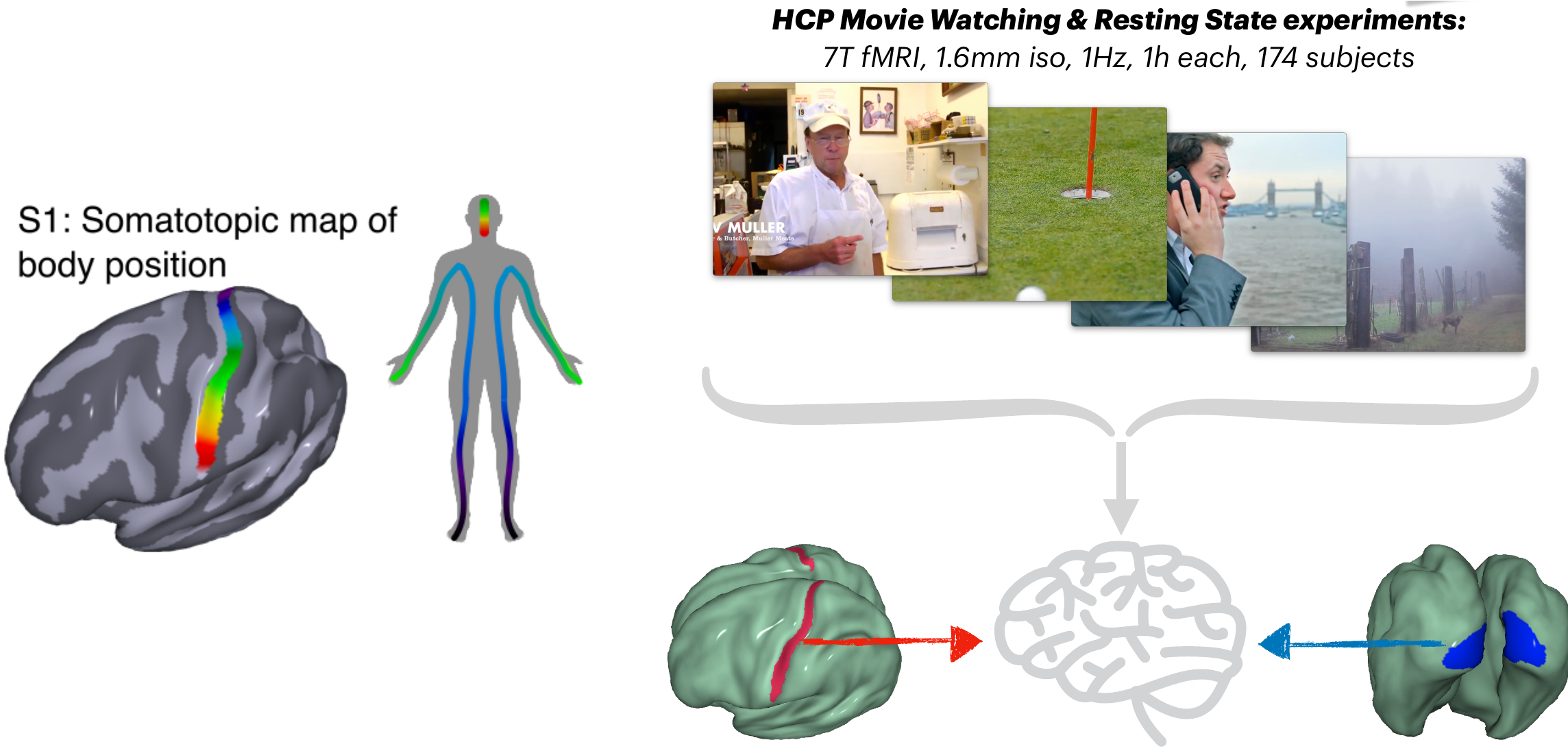
- Every voxel, in movies and at rest, explained from V1 and from S1.
Hedger et al., Nature, 2026
Receptive fields on cortex
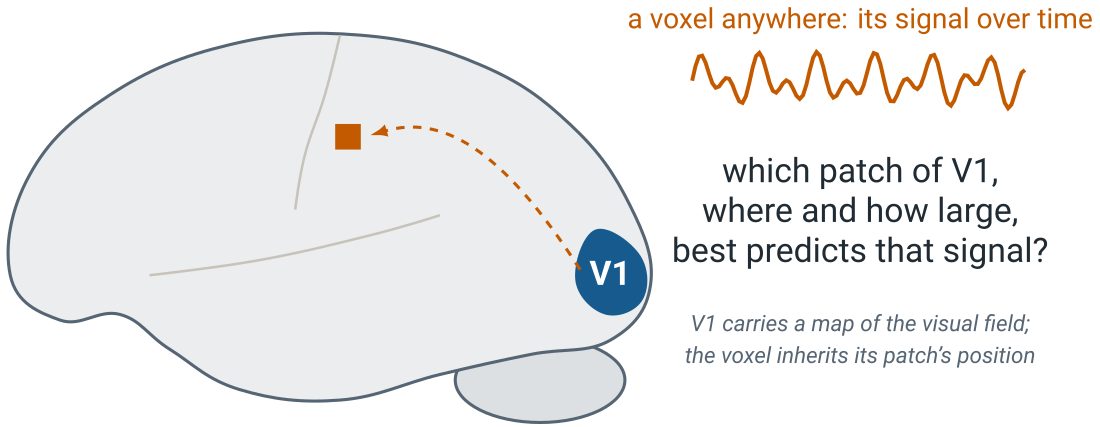
Video recruits touch maps
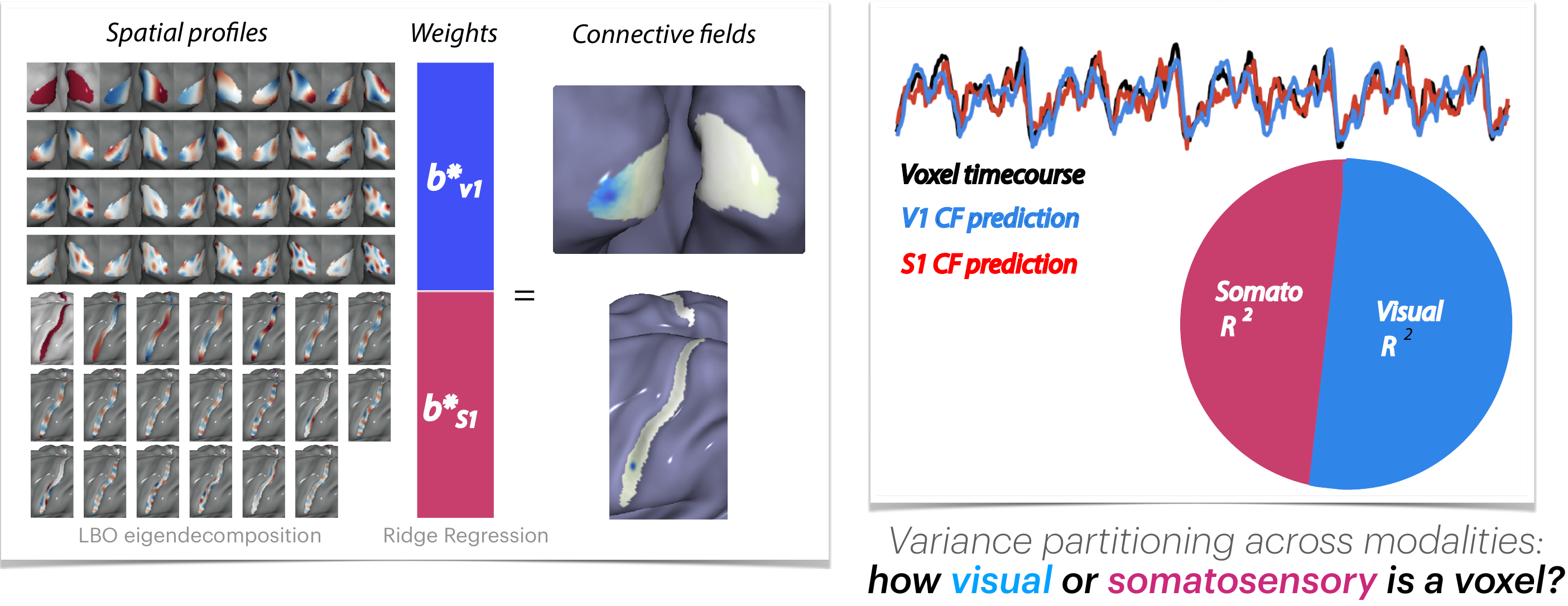
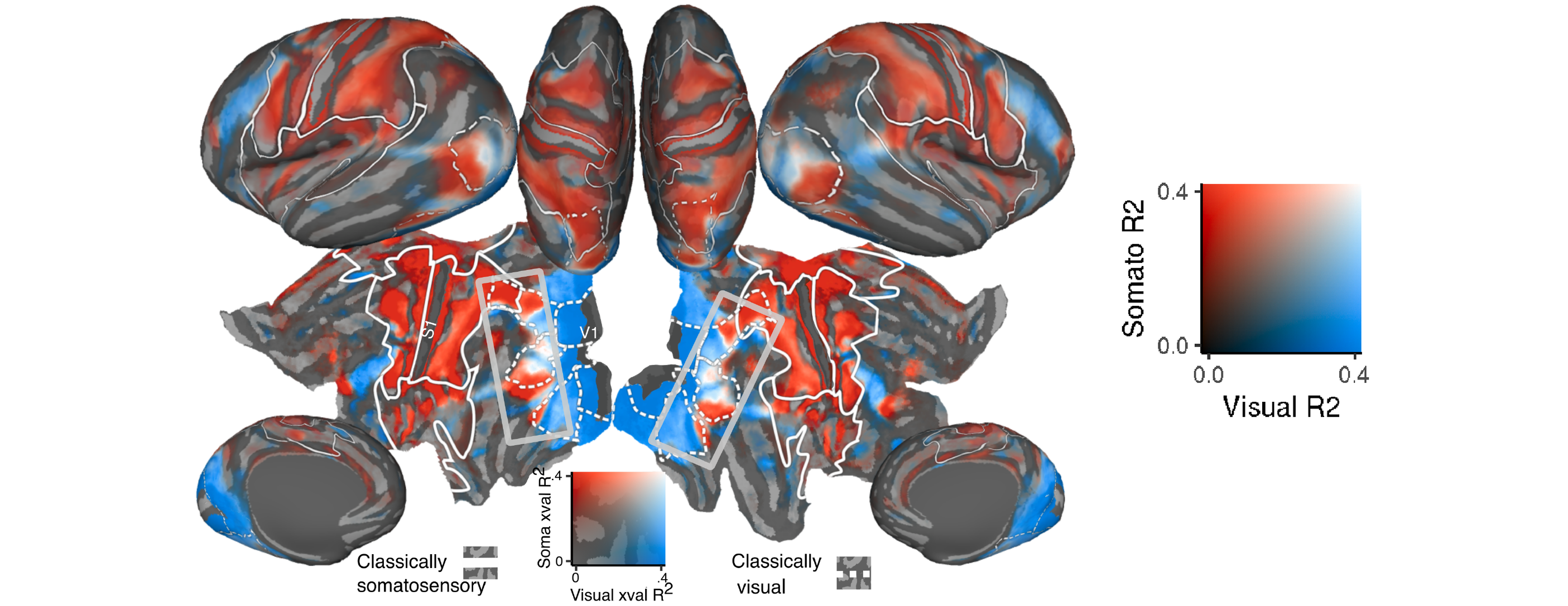
- Dorsolateral visual cortex is explained better by S1 than by V1.
Hedger et al., Nature, 2026
Body maps tile visual cortex
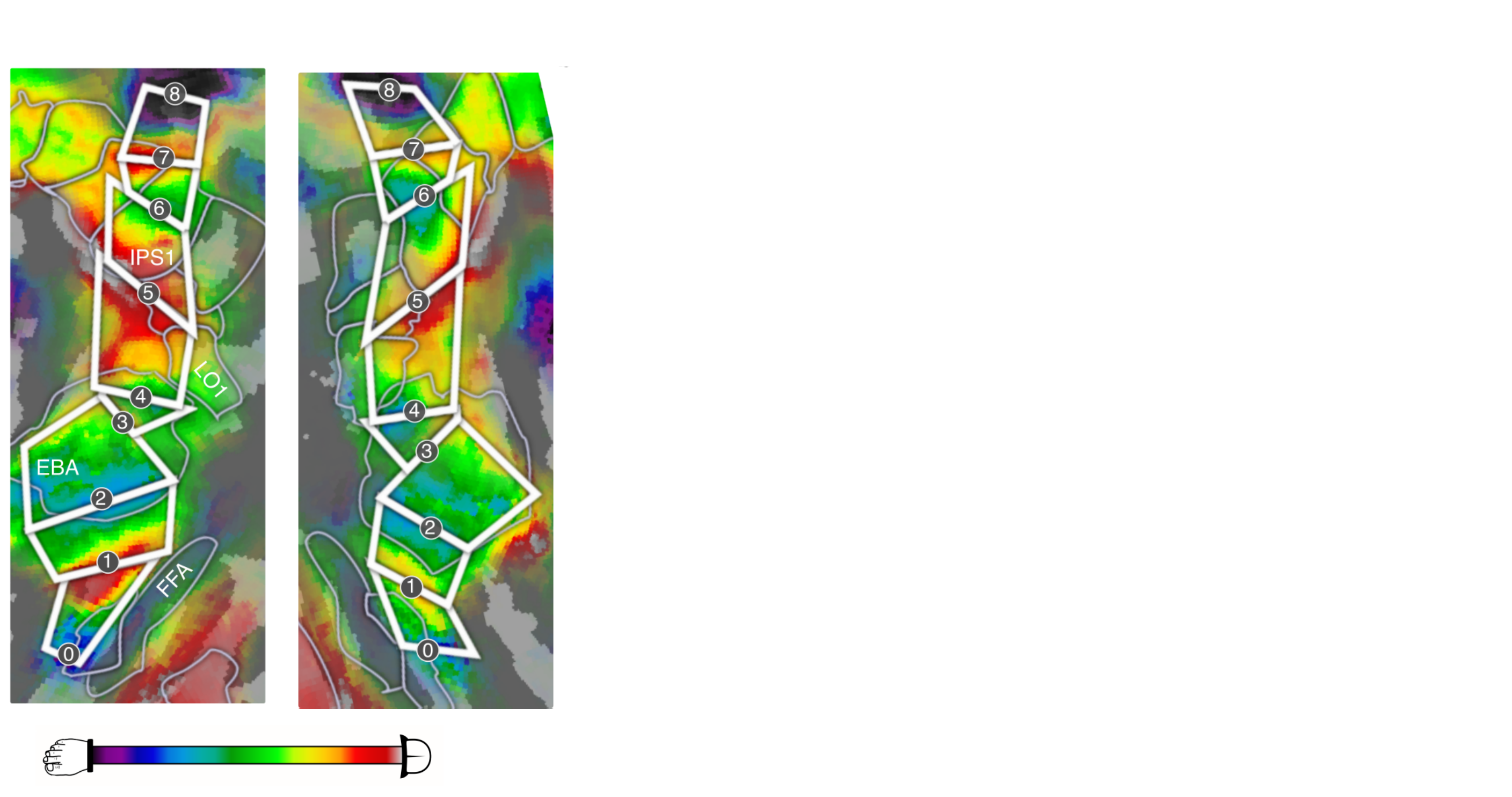
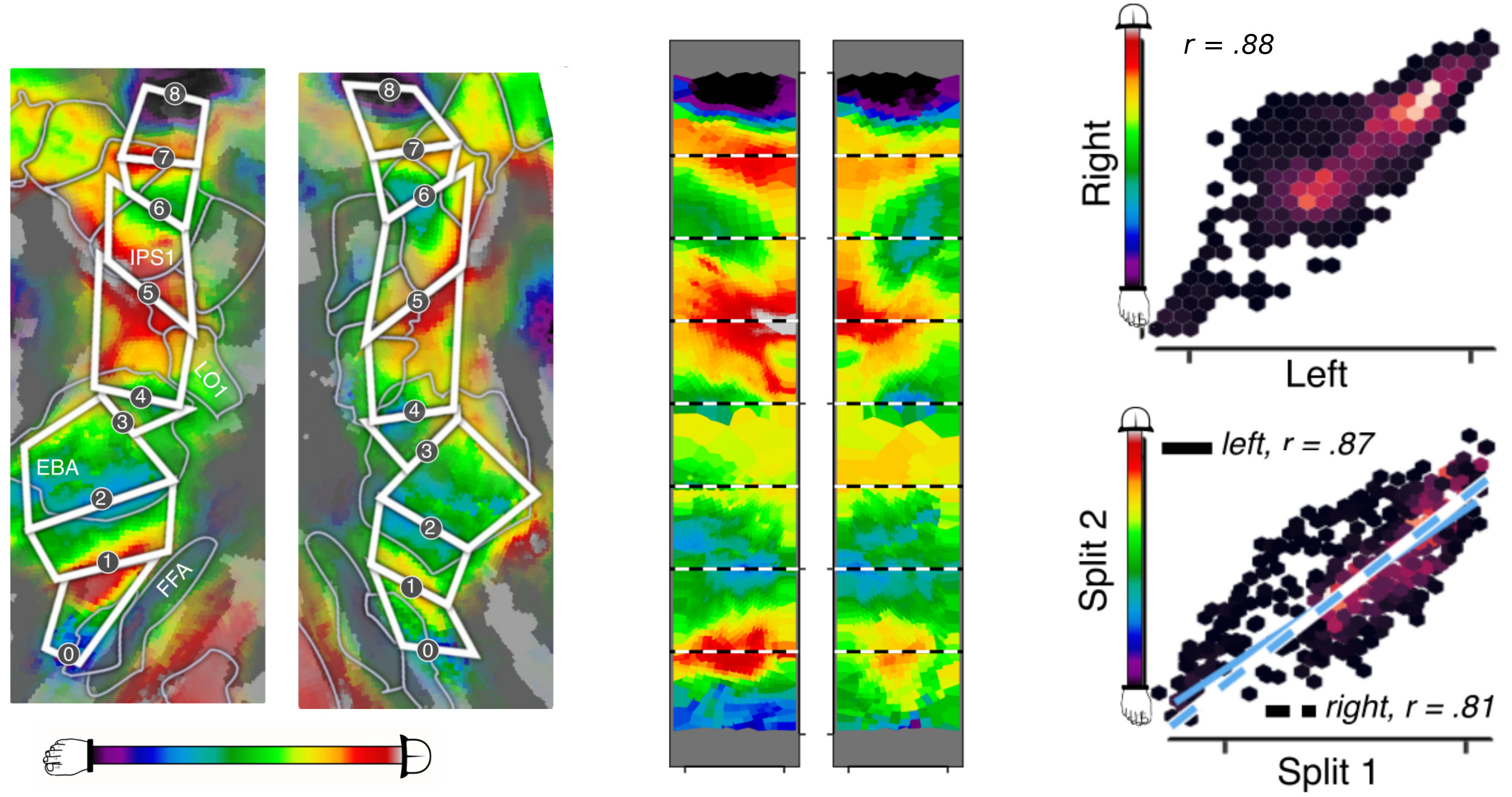
- Toe-to-tongue maps repeat; the hemispheres agree, r = 0.88.
Hedger et al., Nature, 2026
Self, other and the body
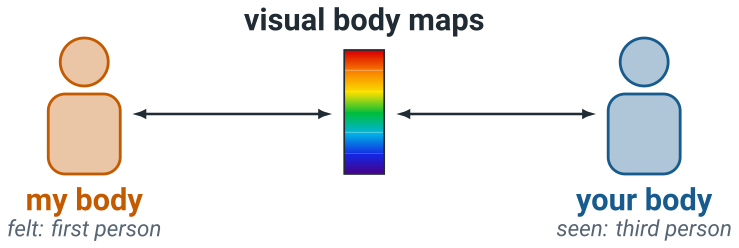
- Visual body maps may translate between my body and yours.
- Embodiment shapes psychedelic effects such as ego dissolution.
![]()
- Body-based techniques are central to meditative practice.
![]()
- Which contextual computations underlie these bodily effects?

Next: the body on psilocybin
The bar sweep again, over the body: touch, attention, vision. Under placebo and psilocybin, after body-scan training.
Funded, and about to start.
Maps hold, modulation moves
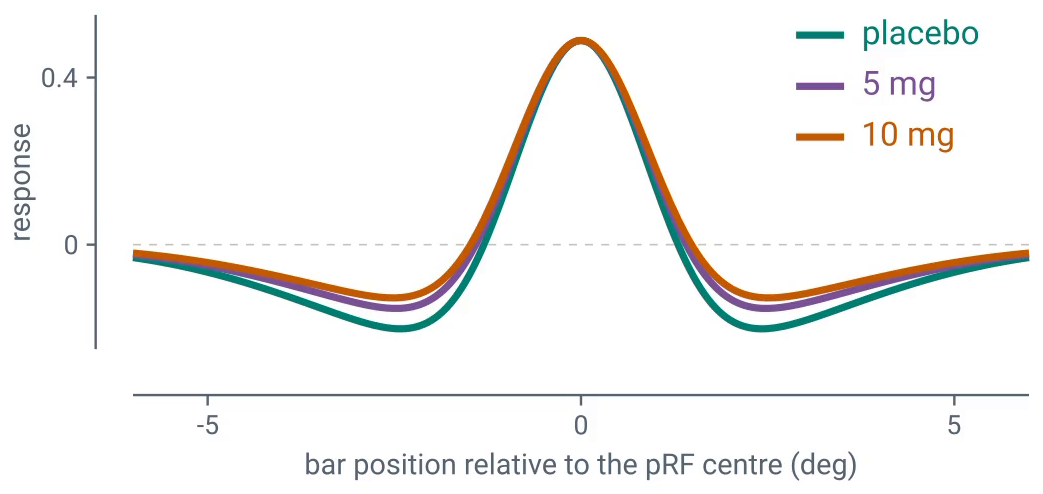
- Psilocybin weakens surround suppression in V1 to V3; the maps stay.
- The same change shows in perception: the Ebbinghaus illusion grows by half.
- Next: the body maps where seeing and feeling meet.
- Systems neuroscience on human psychedelic experience.
Thank you for your attention